I love pineapple weed. Almost every one I know loves pineapple weed. People that aren't foragers recognize it too. I always hear 'Oh, I've always wondered what that was!' when I point it out to students.
Pineapple weed (Matricaria discoidea) is a tough, beautiful little herb that seems to thrive in the worst soils. Dry dirt driveways, trail heads, well-worn footpaths, these are the places to seek pineapple weed. And you will be rewarded with a sweet fragrant plant that supplies an almost perfect cup of tea. Herbally, it's used the same way Chamomile is. I've often wondered if most of the 'medicine' that comes from a few herbal teas is simply from practicing stillness for a few moments, filling your head with steam as you sip and watching the world go by, just for a few minutes.
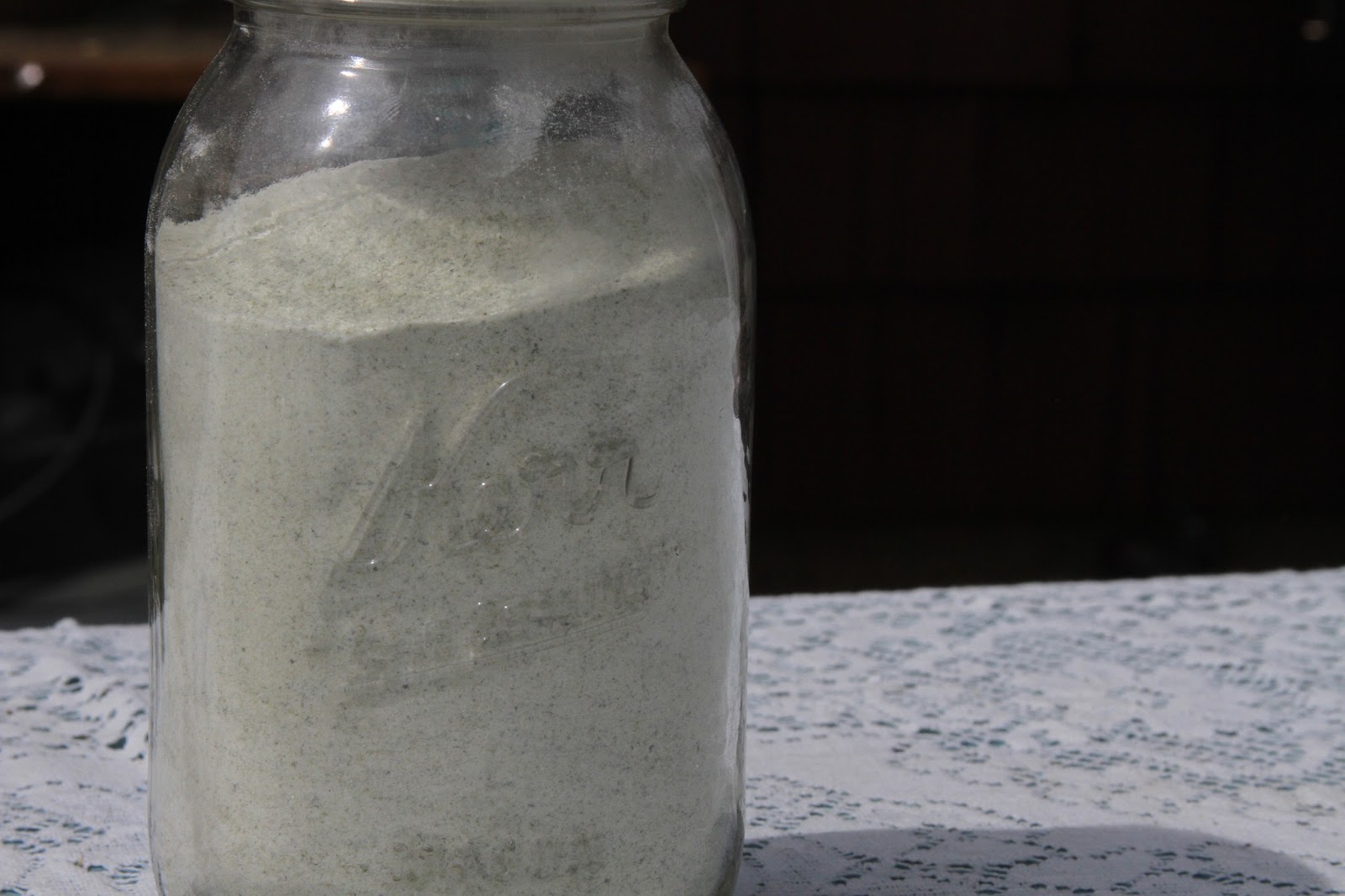
I've often tried to 'keep' the flavor of pineapple weed. Mostly I've been unsuccessful. The oils dissipate quickly when drying. Last year, I infused some of the herb in glycerin. It was good for things like cream cheese frosting, but really was too sweet to use for much else. This year though, I tried infusing sugar with it and the oils seem to be binding with the sugar. I am going to use this for glazes and baking.
Mix 1 cup of pineapple weed heads with one cup of sugar. Run through the blender in small batches. The sugar will get wet and lumpy from the crushed flower heads. Spread mix out on a baking sheet and dry. (It took about two days.) Occasionally, I broke the chunks up with a fork.
If you don't mind the lumps, you can use it as it is. Otherwise you can run it through a blender again.
It's a beautiful shade of green and smells so good!
Showing posts with label sugar. Show all posts
Wednesday, March 27, 2013
Sunday, January 17, 2010
All Things Violet...
Down in a green and shady bed
A modest violet grew;
Its stalk was bent, it hung its head,
As if to hide from view.
And yet it was a lovely flower,
Its colors bright and fair!
It might have graced a rosy bower,
Instead of hiding there.
Yet there it was content to bloom,
In modest tints arrayed;
And there diffused its sweet perfume,
Within the silent shade.
Then let me to the valley go,
This pretty flower to see,
That I may also learn to grow
In sweet humility.
---Jane Taylor.
I thought I better get out for a good walk before the next storm hits here. It’s a gloomy day, with damp gusts of wind pushing the low clouds my head. But my somber mood lifted quickly when I spotted several Viola sp. peeking through last fall’s duff.
If there is any plant that sings of spring to me, it’s the sweet little violet. There is not another herb that reminds me of my childhood as much as those demure blooms. As a toddler, my mother made candy and spun a lovely violet sugar from them. On special occasions, she also perfumed me with violet cologne. Nowadays, my mother suffers from dementia and with her illness comes a raging sweet tooth. So the tables are turned. I make the violet candy, she sneaks them out of the jar and I pretend not to notice.
Violets are a cooling herbs with bitter qualities. The plant contains methyl-salicylic acid and violutoside, falconoid, violaxathin and derivatives, anthocyanins and coumarins, as well as mucilage, tannins and triterpene saponins. There are many species of Viola in the US and the genus includes pansies, violas and violets. All are edible and interchangeable however, excessive intake of V. oderata can cause nausea and individuals that are sensitive to saponins may develop diarrhea with long term use. Modern herbalists have used violets as a mild pain reliever, for respiratory problems such as asthma, bronchitis and congestion, different types of cancer, eczema and a host of other ailments which require anti-inflammatory actions. Because it’s been used successfully for detoxifying the lymph system, it may function to help modulate the immune system as well.
The young leaves are delicious added raw to salads, and are another of nature’s vitamin ’powerhouses’. A bit added to balms and salves, helps with dry, itchy skin. I use them in a syrup for sore throats. They can be added to vinegars, and violet jelly is a sublime experience. The flowers also have high levels Vitamin C and have a delicate sweet flavor.
Whether you decide to make violet candy, jelly or sugar, the recipes are about the easist to come out of the kitchen and require few ingredients
Here is a very simple recipe from my childhood.
Violet Sugar
Sugar infused with the delicate aroma of violets has a special place in my kitchen. Teas, frostings, baked goods. I love them all.
1/2 C Viola sp flowers, washed and allowed to dry.
1 C white sugar
Layer ½ inch of sugar into a jar. Place a single layer of violets on top. Repeat till gone. Let sit for two weeks. Use just about anywhere you’d use regular sugar.
A modest violet grew;
Its stalk was bent, it hung its head,
As if to hide from view.
And yet it was a lovely flower,
Its colors bright and fair!
It might have graced a rosy bower,
Instead of hiding there.
Yet there it was content to bloom,
In modest tints arrayed;
And there diffused its sweet perfume,
Within the silent shade.
Then let me to the valley go,
This pretty flower to see,
That I may also learn to grow
In sweet humility.
---Jane Taylor.
I thought I better get out for a good walk before the next storm hits here. It’s a gloomy day, with damp gusts of wind pushing the low clouds my head. But my somber mood lifted quickly when I spotted several Viola sp. peeking through last fall’s duff.
If there is any plant that sings of spring to me, it’s the sweet little violet. There is not another herb that reminds me of my childhood as much as those demure blooms. As a toddler, my mother made candy and spun a lovely violet sugar from them. On special occasions, she also perfumed me with violet cologne. Nowadays, my mother suffers from dementia and with her illness comes a raging sweet tooth. So the tables are turned. I make the violet candy, she sneaks them out of the jar and I pretend not to notice.
Violets are a cooling herbs with bitter qualities. The plant contains methyl-salicylic acid and violutoside, falconoid, violaxathin and derivatives, anthocyanins and coumarins, as well as mucilage, tannins and triterpene saponins. There are many species of Viola in the US and the genus includes pansies, violas and violets. All are edible and interchangeable however, excessive intake of V. oderata can cause nausea and individuals that are sensitive to saponins may develop diarrhea with long term use. Modern herbalists have used violets as a mild pain reliever, for respiratory problems such as asthma, bronchitis and congestion, different types of cancer, eczema and a host of other ailments which require anti-inflammatory actions. Because it’s been used successfully for detoxifying the lymph system, it may function to help modulate the immune system as well.
The young leaves are delicious added raw to salads, and are another of nature’s vitamin ’powerhouses’. A bit added to balms and salves, helps with dry, itchy skin. I use them in a syrup for sore throats. They can be added to vinegars, and violet jelly is a sublime experience. The flowers also have high levels Vitamin C and have a delicate sweet flavor.
Whether you decide to make violet candy, jelly or sugar, the recipes are about the easist to come out of the kitchen and require few ingredients
Here is a very simple recipe from my childhood.
Violet Sugar
Sugar infused with the delicate aroma of violets has a special place in my kitchen. Teas, frostings, baked goods. I love them all.
1/2 C Viola sp flowers, washed and allowed to dry.
1 C white sugar
Layer ½ inch of sugar into a jar. Place a single layer of violets on top. Repeat till gone. Let sit for two weeks. Use just about anywhere you’d use regular sugar.
Subscribe to:
Posts (Atom)